
Short Summary:
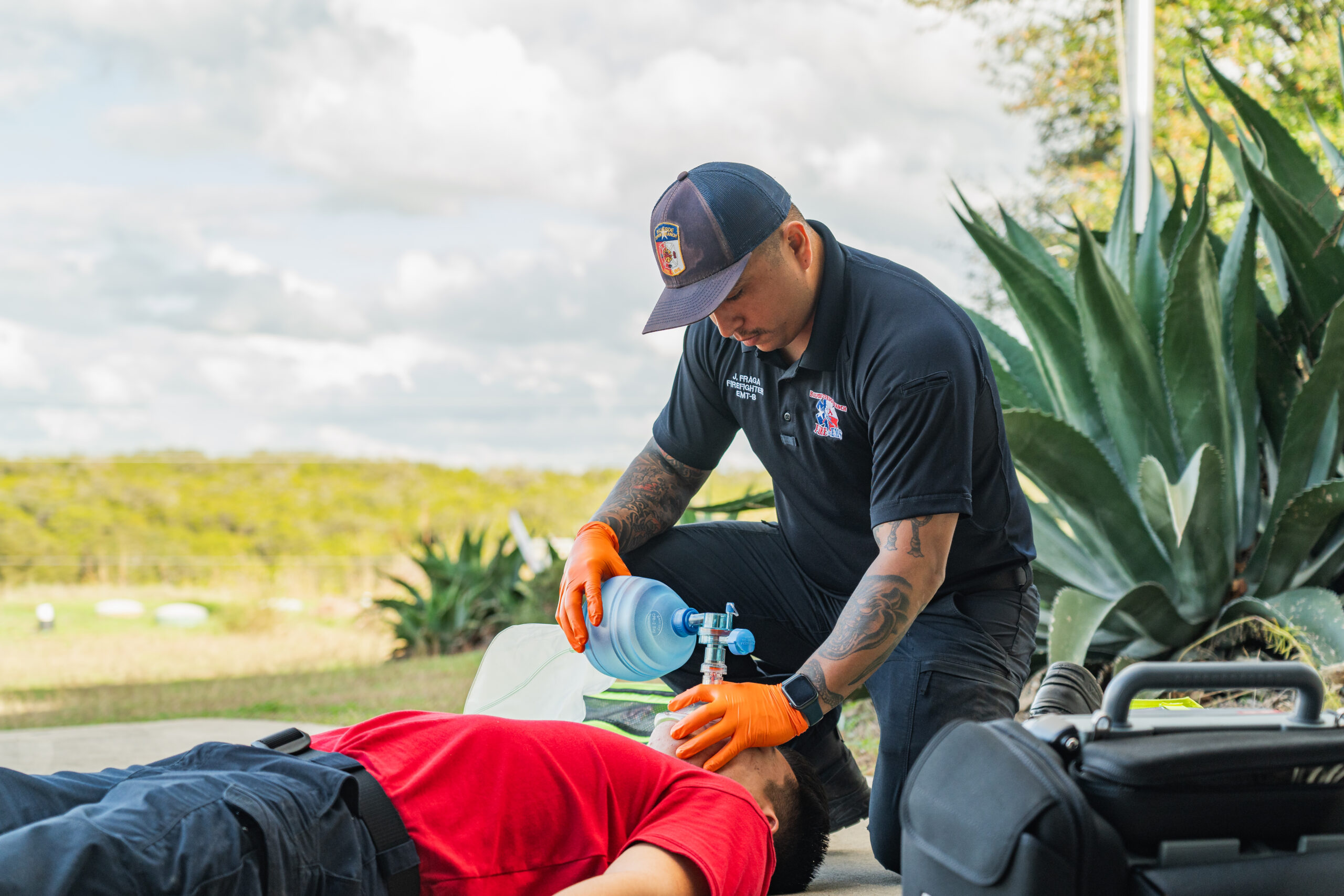
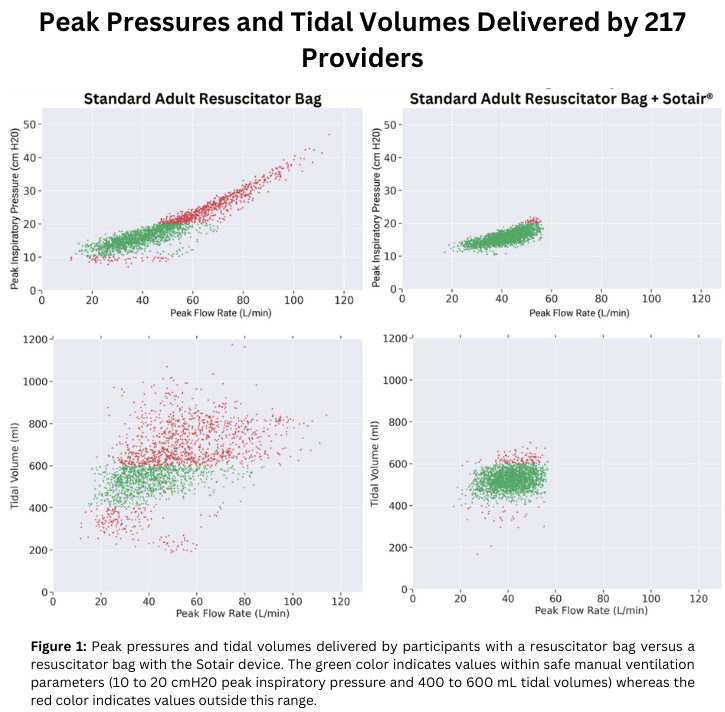
This study involved 217 first responders from fire departments in Tennessee. Participants performed 60 seconds of manual ventilation on a simulated lung without the Sotair device. After a brief educational intervention on using the Sotair flow-rate limiting device, they repeated the 60-second ventilation session with Sotair attached to the manual resuscitator bag. The study compared peak inspiratory pressures, tidal volumes, and respiratory rates before and after the intervention.
Key Findings:
- Lower Peak Inspiratory Pressures: Sotair reduced peak pressures (15.7 cmH₂O vs. 17.6 cmH₂O, p < 0.01).
- More Controlled Tidal Volumes: Sotair provided lower tidal volumes (525 mL vs. 594 mL, p < 0.01).
- Improved Ventilation Consistency: After a brief educational intervention, providers ventilated more consistently with Sotair, demonstrating its ease of adoption and effectiveness in real-world emergency settings.
Conclusion:
The Sotair device significantly improves manual ventilation performance, reducing variability and risks associated with excessive pressures and tidal volumes while ensuring more consistent, controlled, and safer ventilation. This study highlights Sotair’s useful role in optimizing first responder ventilation performance.
Reference:
Kumar P, Holley JE, Justice JM, Slutsky AS, Brady MF. Manual ventilation performance in first responders using a flow-rate limiting device (Sotair). Presented at: EMS World Expo’s International Scientific Symposium in partnership with UCLA’s Prehospital Care Research Forum; September 2024; Las Vegas, NV.