Research AbstractReSS 2025 · AHA Resuscitation Science Symposium
Read the Full Abstract · AHA Journals →
Title
Underventilation With a Small Adult Bag (1,000 mL): Persistent Gaps Despite Real-Time Flow-Guided Training
Kevin Joles; Melody Morales
Presented at
-
Resuscitation Science Symposium (ReSS), November 8–9, 2025
Background
Manual ventilation is a critical but highly variable skill in both prehospital and hospital settings. Concerns regarding overventilation have led some EMS systems to adopt smaller bag-valve masks (BVMs). However, smaller bags may increase the risk of underventilating adult patients.
Research Question
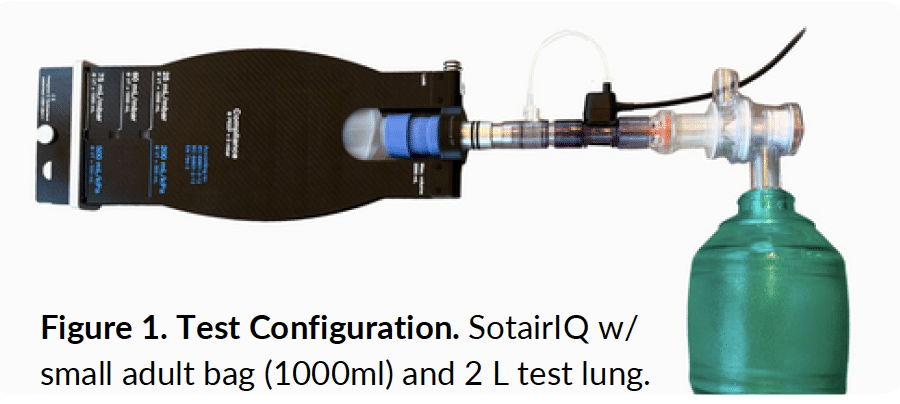
This study evaluated whether a small adult bag (1,000 mL) can deliver adequate tidal volume for an average adult male and whether performance improves after a brief training intervention using real-time flow and volume feedback (SotairIQ) and a flow-limiting device (Sotair, ~55 L/min cap).
Methods
Fifty-five first responders from Johnson County, Kansas participated in the study. Participants performed 60 seconds of manual ventilation on a simulated healthy adult with a target tidal volume of 420–570 mL. Ventilation was performed using a VENTLAB AirFlow 1,000 mL small adult bag. Measurements included tidal volume (Vt), peak flow, and respiratory rate (RR), recorded using the SotairIQ training platform (SafeBVM, Boston).
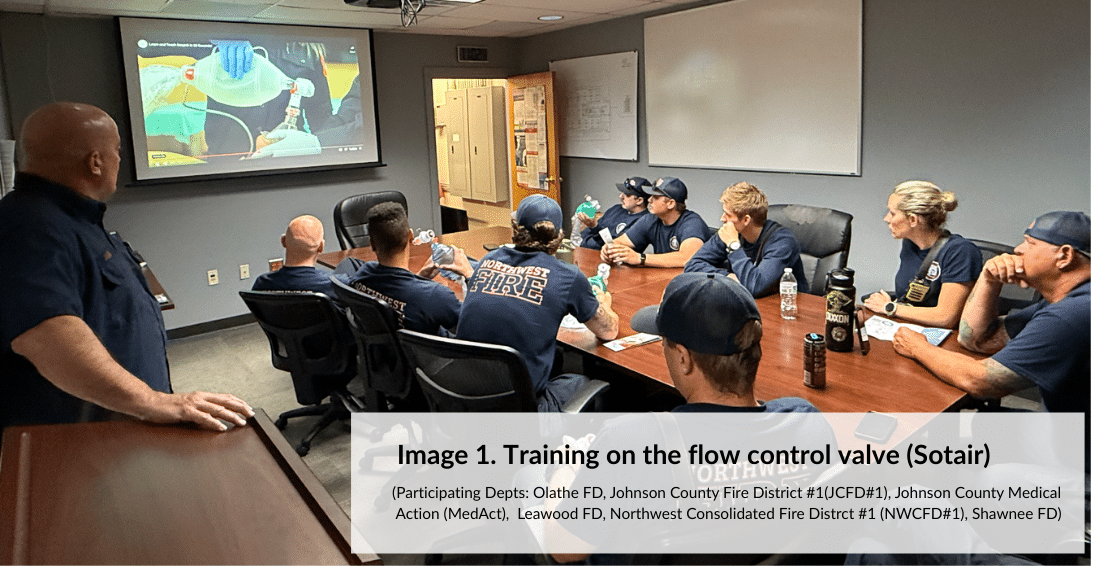
Participants then received a brief intervention consisting of a 2-minute instructional video and 1 minute of hands-on training using a Sotair flow-limiting valve (~55 L/min flow control). The ventilation task was repeated with the Sotair valve inline.
Results
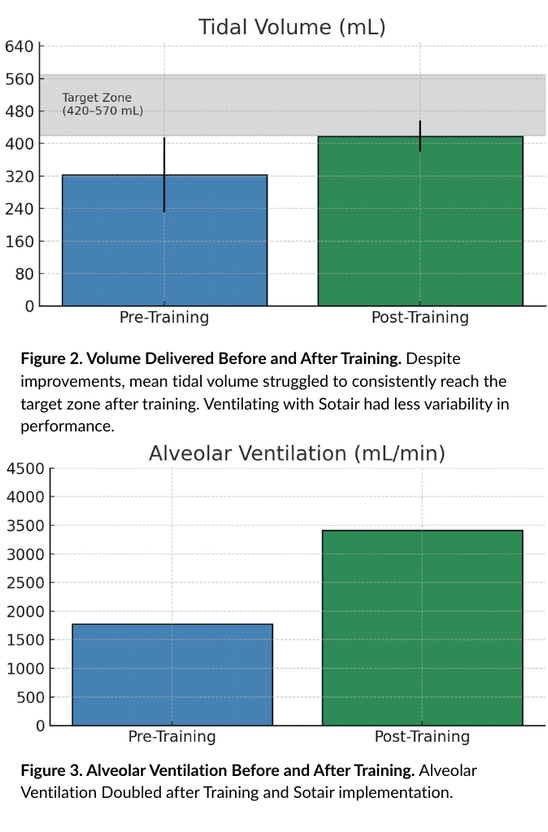
Mean peak flow rates and tidal volumes increased after training (44.5 ± 5.2 vs 28.3 ± 12 LPM; p<0.05; 418 ± 38.6 vs 323.2 ± 92.2 mL; p<0.05).
Before training, 87.8% of breaths were below the target tidal volume of 420 mL compared with 51.5% after training (p<0.05).
Baseline respiratory rate was 9.73 ± 2.49 breaths per minute compared with 11.8 ± 4.36 after training (p<0.05).
Estimated alveolar ventilation (assuming 150 mL dead space) increased from 1776.7 mL/min to 3409.7 mL/min after training (p<0.05).