Title
Underventilation With a Small Adult Bag (1,000 mL): Persistent Gaps Despite Real-Time Flow-Guided Training
Kevin Joles; Melody Morales
Presented at
-
Resuscitation Science Symposium (ReSS), November 8–9, 2025
Background
Manual ventilation is a critical but highly variable skill in both prehospital and hospital settings. Concerns regarding over-ventilation have led some EMS systems to adopt smaller bag-valve masks (BVMs). However, smaller bags may increase the risk of under-ventilating adult patients.
Research Question
This study evaluated whether a small adult bag (1,000 mL) can deliver adequate tidal volume for an average adult male and whether performance improves after a brief training intervention using real-time flow and volume feedback (SotairIQ) and a flow-limiting device (Sotair, ~55 L/min cap).
Methods
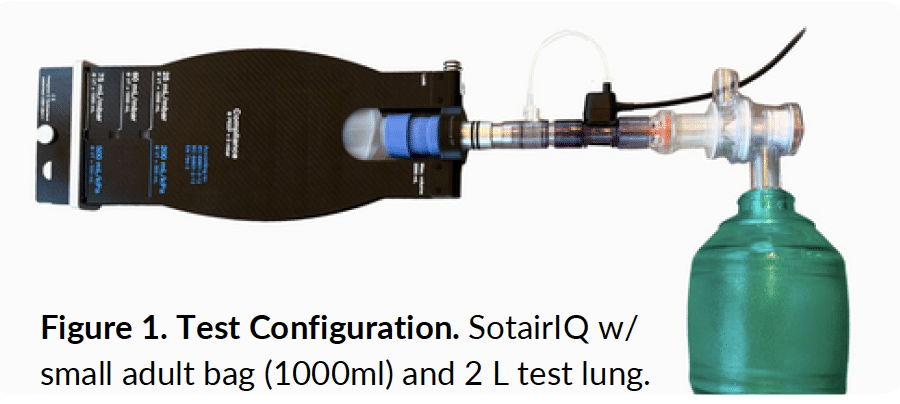
Fifty-five first responders from Johnson County, Kansas participated in the study. Participants performed 60 seconds of manual ventilation on a simulated healthy adult with a target tidal volume of 420–570 mL. Ventilation was performed using a VENTLAB AirFlow 1,000 mL small adult bag. Measurements included tidal volume (Vt), peak flow, and respiratory rate (RR), recorded using the SotairIQ training platform (SafeBVM, Boston).
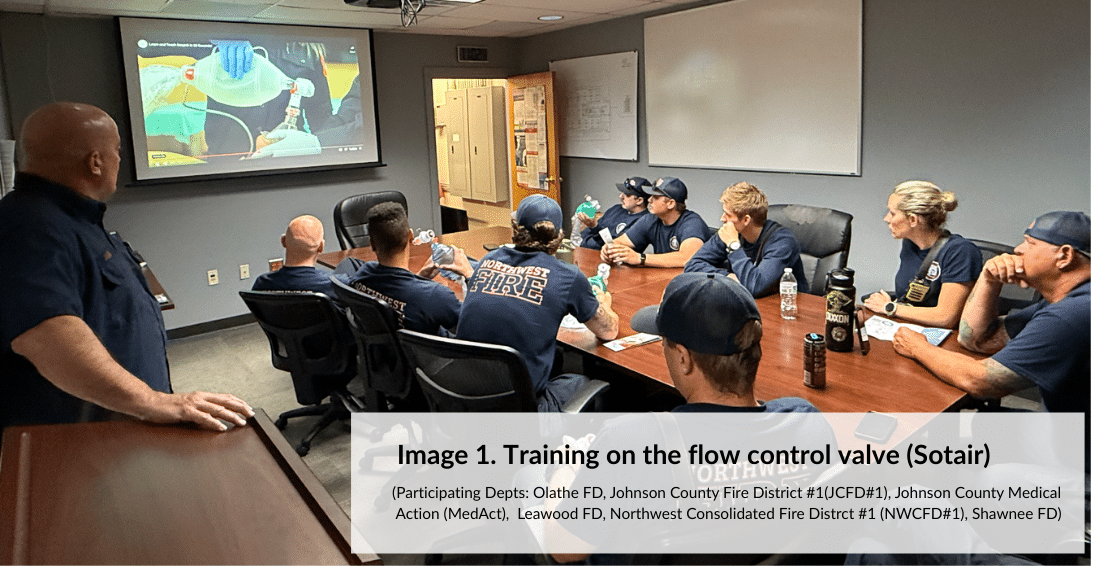
Participants then received a brief intervention consisting of a 2-minute instructional video and 1 minute of hands-on training using a Sotair flow-limiting valve (~55 L/min flow control). The ventilation task was repeated with the Sotair valve inline.
Results
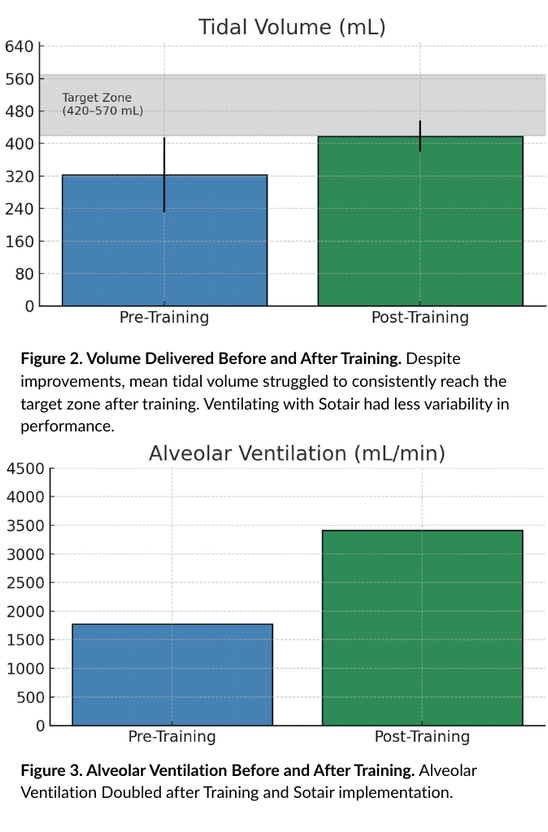
Mean peak flow rates and tidal volumes increased after training (44.5 ± 5.2 vs 28.3 ± 12 LPM; p<0.05; 418 ± 38.6 vs 323.2 ± 92.2 mL; p<0.05).
Before training, 87.8% of breaths were below the target tidal volume of 420 mL compared with 51.5% after training (p<0.05).
Baseline respiratory rate was 9.73 ± 2.49 breaths per minute compared with 11.8 ± 4.36 after training (p<0.05).
Estimated alveolar ventilation (assuming 150 mL dead space) increased from 1776.7 mL/min to 3409.7 mL/min after training (p<0.05).
Conclusion
Small adult bags delivered suboptimal tidal volumes for average adult males. Training combined with a flow-limiting device significantly improved alveolar ventilation, although many breaths remained below target volumes after training. Findings suggest that small adult bags may be inadequate for routine adult ventilation, though performance can be partially improved through targeted flow-controlled training.